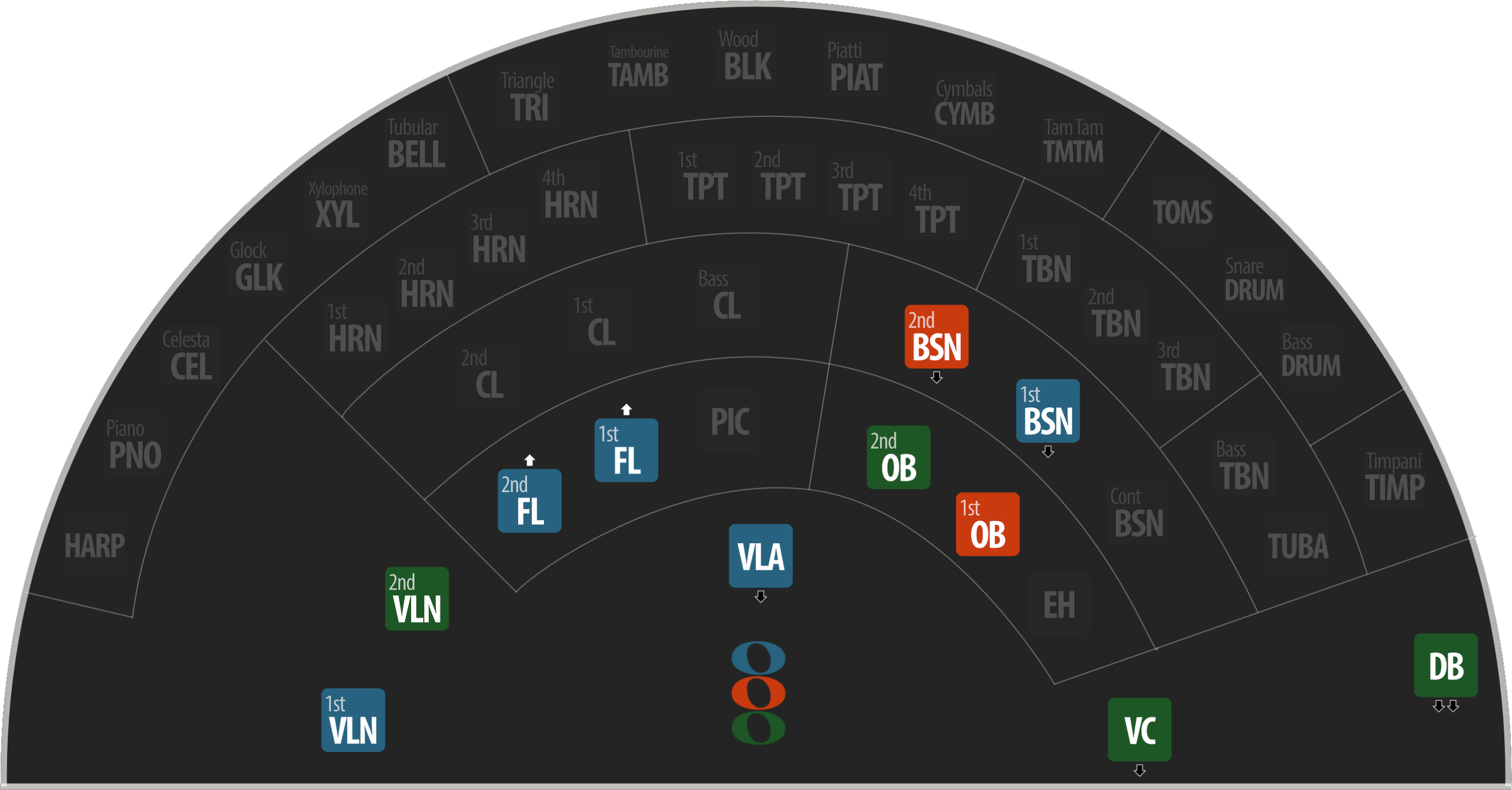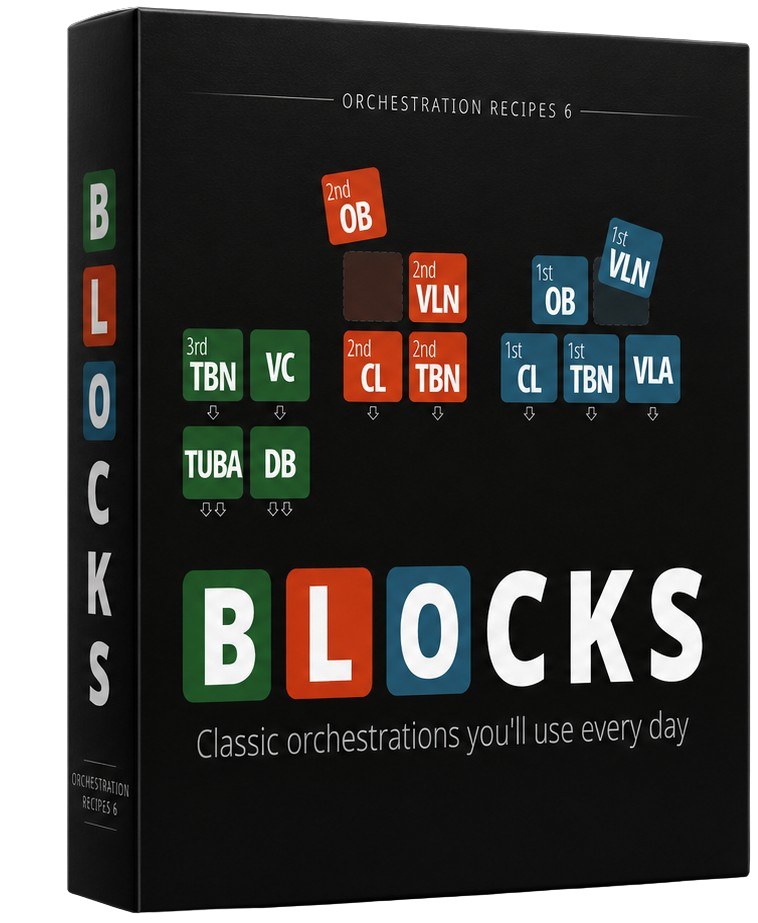
Hear Blocks in action
All examples created with readily available sample libraries.
Blocks includes another 64 orchestrated examples not shown here.
Concert-hall origins
The orchestrations are drawn from works by the likes of Beethoven, Brahms and Tchaikovsky—not invented for the course. You’re working with distributions that great composers trusted to realise their own ideas.
Orchestrations for daily use
Blocks are deliberately general-purpose—quietly professional, supporting whatever you sketch. Which means you can use them everywhere.
Your favourite library is fine.
Any standard orchestral library, any DAW, any notation software. No specialist purchases required—use what you already have.
Sketch, swap. Then sequence
Pick a block to orchestrate your sketch. Swap blocks to compare. Sequence blocks across a cue to give a static sketch forward movement—the orchestration changes even when the writing doesn’t. Every option is concert-hall-tested, so you know it works.
2 minute cue built entirely from a sequence of Blocks.
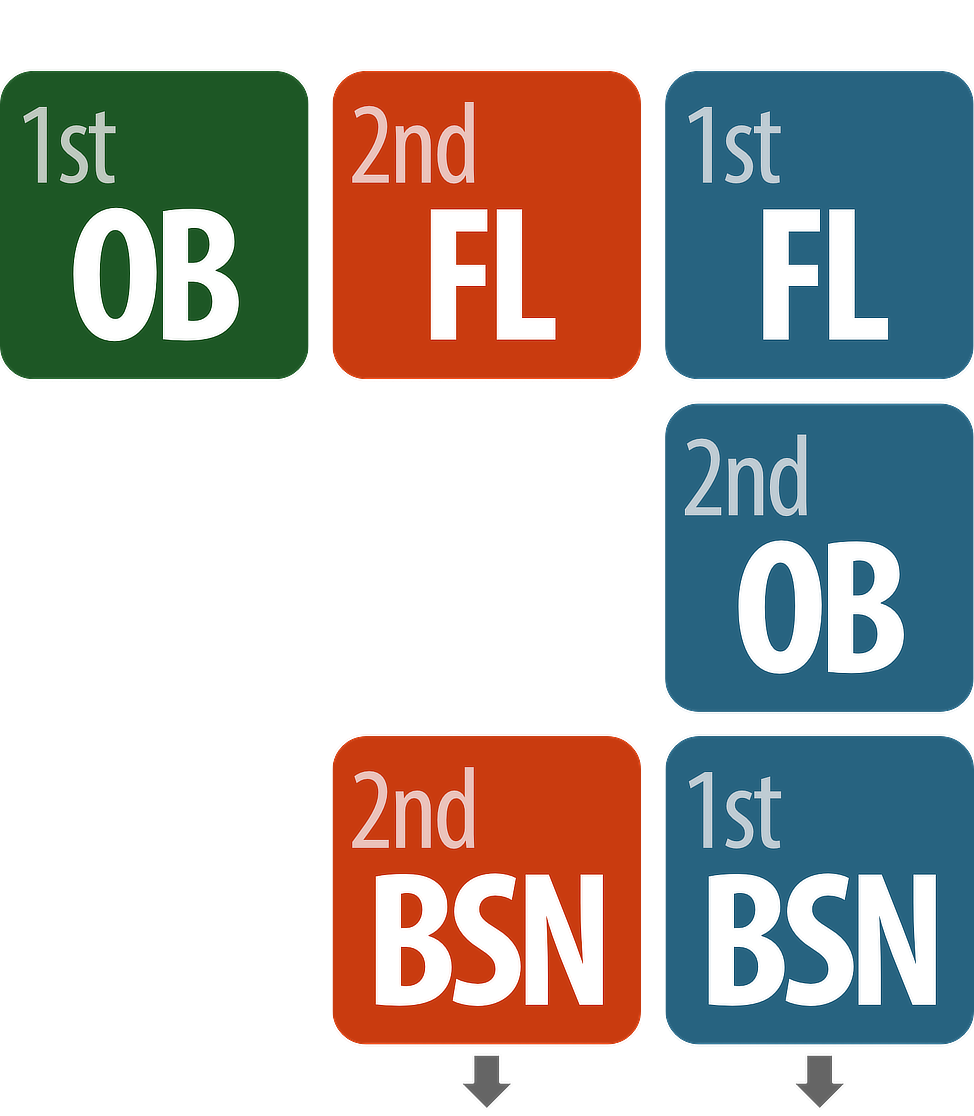
Who plays what, at a glance
Traditional scores scatter combinations across transposing instruments, mixed clefs, and dozens of staves. Blocks strips it back so the orchestration jumps out.
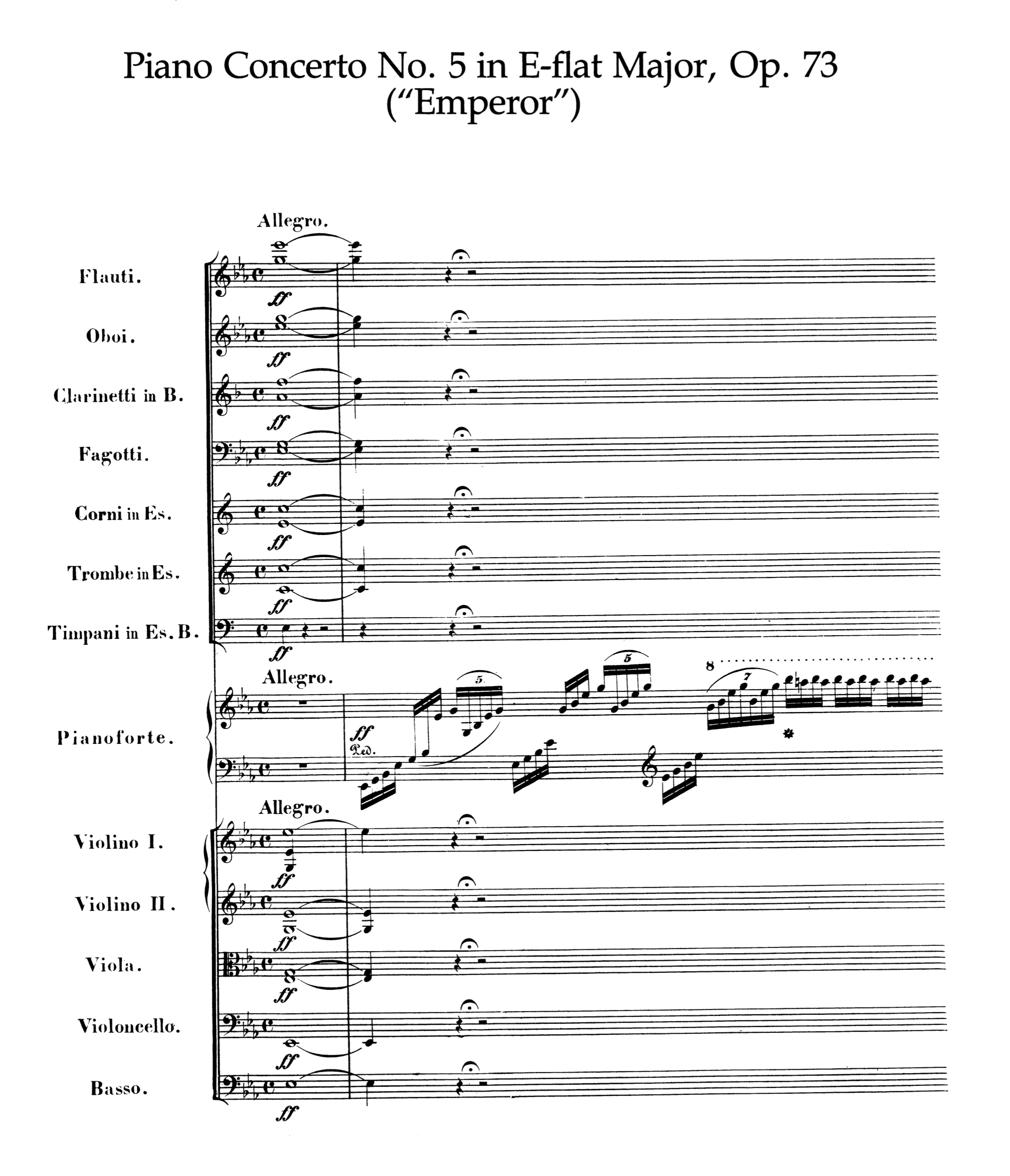
This famous opening is just an Eb Major Chord—but can tell quickly who is on each note? Transposing instruments, mixed clefs, scattered parts…scores contain information composers need. They just don’t do it legibly.
Deep dives. For total recall.
Blocks is packed with walkthroughs, breakdowns, examples and practice tools—all designed to get these orchestrations off the page and into your head.
Unpacked, not just presented
Blocks takes a deep dive into 20 classic orchestrations, each one road-tested with multiple examples, explained in detail, backed by practice resources designed to make them stick.
Put through their paces
80 fully scored examples to explore and experiment with, twice as many as any previous Orchestration Recipes. Not demonstrations—provocations, each pushing a different type of sketch through the block (and sparking ideas for your own sketches)
Where total recall gets you
Once you just know these blocks everything changes. You can build fast, without a reference in sight. Audition alternatives in your head, with your DAW closed. And then—ultimately—modify these core orchestrations, because you understand how they’re built.
3 minute cue built mostly from as-is Blocks, and a couple of slightly modified Blocks (instruments removed/added). Recorded here with VSL’s Synchron Prime, but any orchestra works fine.